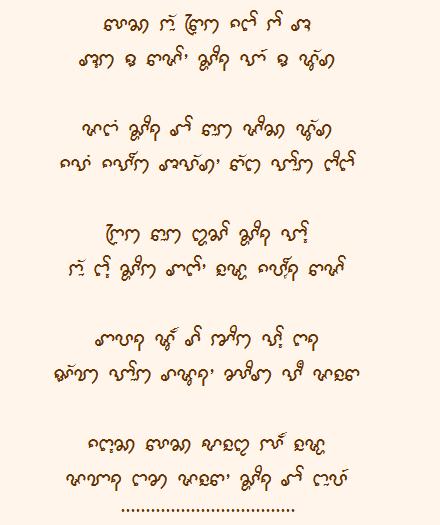
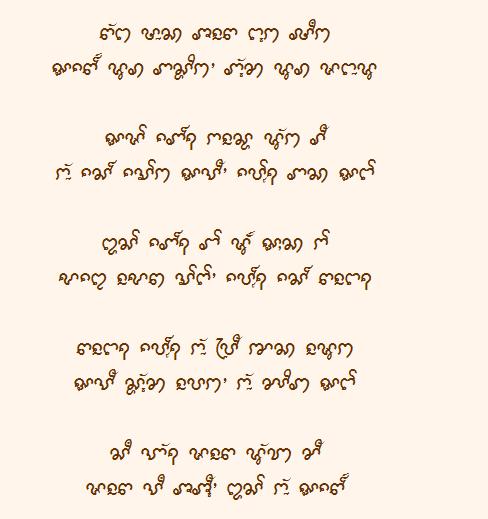
-Ariya Muk Thruh Palei-
Source : http://my.opera.com/vanikan/blog/2009/10/09/ariya-muk-thruh-palei
Day 1: One page was read. I read it barely and almost give up!
Day 2: Three pages.
Day 3: Ten pages + explanation from teacher.
My comment: This literary writing is not really long, and using simple words (either bombastic words as well) BUT the combination of those simple words turns my head into blank. I found out there are some idioms in it, eg: “mâyah per habuw lai jua abih” ; they are not talking about “dust” and “silence” . I don’t really get this ariya but someway somehow I can understand the whole story behind this writing, and the understanding gets stronger after the explanation by teacher. Later I’ll try to transcript it into Huruf Cam, later later later..someday, after I learn it..hihi..
Muk Thruh Palei roles the character of “nenek kebayan” in Malay literature, which, this character is responsible to preserve the proper behavior of the Malays. I realize that the new generation like us don’t used to this character as a good person because our minds were contaminated with false tales. I’ve heard the word “muk sruh palei” since I was 4 years old, and I was so afraid of her, I thought she was a ghost! I ran to get my mom, and have nightmares every night. I bet the same situation happen when we talk about “nenek kebayan”! Don’t believe it? Try to google “nenek kebayan”.
The rumi transcription may differ from one another. Eg: the word “listen” is spelled “peng” but pronounce “pang”, so, some of the reader will transcript it as “peng” and some other prefer “pang”. But this is not a major problem because Rumi Cam transcription and Huruf Cam transcription are not yet fixed like Akhar Cam. I’m not going to translate it into other languages, for now, because; firstly, I’m not an expert, and secondly I dun want my people to be spoilt. They should learn their writings IN their own language, not by other languages. Believe me, it’s so amazing playing with our own script!! But dun forget to ask blessings from Allah al-Alim, ‘cause this language is His!
Well, I think EVERY girl should read this ariya. It teaches me a lot. =)
Ni kambuan muk thruh palei
Ndom blaoh kakei pieh ka anâk
Anâk peng amaik akhan
Ka dom phuel jalan ngap mbeng anguei
Hader ndaom kambuan baik mây
Ngap mbeng anguei threm bimbul
Inâ pieh dom phuel
Anâk saong kamuen peng baik bijip
Inâ pieh dom kadha
Drep o mada pieh ka mây
Mâyah hu kambuen di drei
Hagait duh ra brei drep mây mâcai
Juai klak kambuen juai nai
Ngap tuei hatai drep oh kandaong
Mâyah peng kambuan drep thraong
Nan mâng kandaong drep daok saong mây
Kandaong drep kayua kamei
Di rim harei jreng aiek bibiak
Drep ar halun halak
Gleng aiek bibiak juai brei karang
.
. . .
Juai tey hey klak caik
Tel blaoh ra klaik likuk drei ra klao
Blaoh drep jak gep nao
Drei lac ra klao bilei patat
Mâduh nyu kathaot kayua o ligaih
Mâduh nyu kathaot raong raih
Anguei o ligaih laik saong tho
Kayua nyu chap hatem lo
Hajieng nyu o njep saong urang
Ginaong mai mây ngap jraoh
Lithung thaok blaoh o mâk ramik
Hajieng nyu tian tachep
Yua nyu o njep mây saong kamuen
Khik rabicen mbuen biak
Di dunya rak lo mâng ra klao
Li-i saong cangua
Tapei blaoh ba mâk mai ramik
Haluw juai klak baoh
Cangua juai tataoh ging juai paper
Libik krung ging tanâk
Juai brei manuk prah per habuw
.
. . .
Kambuen puec mâng dahluw
Mâyah per habau lai jua abih
Kayua nyu ramik biak lo
Hajieng mâng nyu hu mâh pariak
Dayep ngan krâh malem
Juai phap hatem tuk abiléh
Mâyah kathaot rambah jang hu thei mbeng
Amel hai di pabah mbeng sang
Pabah mbeng sang mây juai padei
Adat drei jieng kamei
Mây juai padei biak praong pakar
Panuec amaik ndom akhan
Mâyah khing peng mâng njep kumei
Adat saong cambat khing mâgru
Mâgru khing ka thuw mâng nyu ligaih
Anâk ndaom pa-abih
Nan mâng ligaih njep saong urang
.
. . .
Adat drei jieng kumei
Puec kheng ndei chuk di adat
Mâyah mây khing puec
Thuw kanda huec mâng urang mayaom
Mây kanda hai di tian
Gep gen urang oh ndom bilei
Anâk saong kamuen nao mai
Mâyah khing mâyai khim klao dahluw
Nan gheh ra lac sunuw
Khim klao dahluw blaoh ndom hadei
Cek muk Po Inâ
Juai mây mâgru threm puec bilei
Adat drei jieng kamei
Juai mây bilei saong duah mâyai
Nan jeh kumei saiysu
Ra puec jhak hu mây lac mâluw
Blek bleng ra thuw daok hagait ka mây
Mâhit jhak tel Inâ
Mâhit bak tangi lo hadei
.
. . .
Khik rabijen drei biak
Di dunya urak ra klao bilei
Dayep mây daok di sang
Nan urang lac hu kambuen
Anâk threm hakak threm duen
Mâng njep kambuen mây daok dara
Mâyah khing ngap gruk hit
Threm bitanat threm bipagheh
Mây duah urang jak gheh
Mâgru ndaom pieh tel hu pathang
Mâgru baik di urang
Tel hu pathang mây juai camâkaoh
Hajieng juai brei camâkaoh
Chuk mai ra paoh blaoh ra pakaik
Ra puec blaoh ra pakaik
Ratil rataih mai tel amaik amâ
Drei ngap anâk baik bithruk
Mâluw hai di urang
Mây saong pathang ngap biligaih
.
. . .
Anâk mây saong pathang
Juai brei karang aia saong lithei
Adat drei jieng kumei
Di rim harei bhuktik pathang
Ramik drep drei di sang
Juai brei karang ikan saong njem
Gleng aiek lingiw tel dalem
Padai di rateng gleng aiek bibiak
Ramik drep ar di sang
Mây juai pachang truai tel dalem
Nda ka urang tuei gleng
Ra thuw ap bhap krung drei ramik
Mâda blaoh tel ra klaik
Kathaot raong raih ra klao bilei
Ra yap mây kayua kaya
Mây hu mâda drep ra kieng duah
Anâk mâk paluic Inâ
Kathaot ken lo mboh di mâta
.
. . .
Kathaot ngap mbeng bibiak
Kathaot juai cuak threm dua mâyai
Kahra ngap mbeng harei
Mâtak Po brei bidreh urang
Anâ peng amaik akhan
Mây saong pathang juai ngap mâsak
Anâk mây saong pathang
Juai peng urang chuk di adat
Kajap laiy kayua kanduel
Hadah mbaok kamuen kayua hu pathang
Danaok daok di rim harei
Pathang saong drei juai brei limuk
Daok pok caik jieng gru
Nan mâng hu njep tho kambuen
Mâyah pathang nao glai
Daok di sang juai brei karang gruk kamei
Jala mai glaong aia harei
Tanâk lithei blaoh mây habai
Anâk juai alah hatai
Pathang mai mâng glai mây pok lithei
.
. . .
Mbaok mây juai ma-ih
Hatai juai camârih puec saong pathang
Hala cih panâng thraong
Pakao mban tanan jeh ra anit
Pathang puec padeh daok peng
Chuk urang ndom juai tok ginaong
pathang puec mây juai tok
Aân di phik siam hatai kamei
Adat urang jieng likei
Ra puec ngaok kumei mây juai mathao
Ra puec mây juai mathao
Nan jeh ra mâtuaw klaoh tian saong drei
Anâk huec hai di pathang
Ra duah drei hapak jang kayua pathang
Nan mâng urang deng khing tanyi
Kumei halei palue pathang
Nan jeh ra __?__ nyu thuw ka drei
.
. . .
Nyu puec blaoh nyu khria
__?__ dom mâda tuah nyu pablei
Nyu puec blaoh palue
Sap nyu pablei taom di anak
Anâk puec tuei tapak
Bireng khing ngap juai brei alah
Pathang ew nao bidrah
Mây juai kamlah wek juai kumei
Pathang puec mây juai kamlah
Kumei kheng pabah chuk di adat
Adat drei jieng kumei
Ginaong rak ndei ciip ka ra klao
Ra puec mây juai mâthao
Ra ba paklao njep mâh tamuh
Siam tian taleng aia mbaok
Nan jeh ra daok that saong drei
Praong mbaok payua pathang
Nan mâng ka urang yap mây kaya
Mâgru threm pa-abih
Pathang krâh ndih juai juak kateng
Mâyah mây juak kateng
Padai di rateng per nao abih
Nik ndih bihu libik
Rami ramik bah tul pater
Bah tul pater mbiah
Juai paranah super mâta
Dayep ngan krâh malem
Mây juai hatem chap di anih
Mâyah hatem di anih
Nan jeh abih tuah tabiak
Sumu saong kayuw saong jaoh
Libuh gen craoh ralo drei tapa
Nan dreh urang kanda
Abaoh kadha li-uen sap di anih
Khria baik bisiam
Mây saong pathang ngap mbeng bibiak
Daok gheh saong urang lo ra mâyaom
Pathang nao duah mârai
Jien saong padai mây khik ramik
Adat kumei gheh di khik
Juai brei lihik karang drep di sang
Sanâng hai karang duah ken
Mây thuw damân gleng aiek bibiak
Anâk saong amaik bicen
Haber ka urang klaoh tian di drei
.
. . .
Peng blaoh anguei baik
Kambuan ni amaik tuek caik di sang
Hadiep saong pathang
Tajuh apakar peng baik tani
Gosh, did I said it “not really long” ???! Not really long doesn't mean it's short. =|
The funny thing about this practice is that the text used the word “Inâ” but it is taught by a dad!! ..which it should be a mother who is responsible about this matter...there’s no word “Ong Thruh Palei”..hiihii..
Anyway, I admit that I can’t make it 100% well in this practice. I’m always ready for any correction, thank U.
Vocabulary:
phuel = hasil / profit
mây = Chinese; amoi
bijip = seluruh / overall, the whole
mâcai = banyak / many
thraong, sraong = berkat / bless
jreng = menumpu / focus
camâkaoh = main2 / not serious
bibiak = sungguh2 / seriously
lithung, lisung = lesung / mortar
rabijen = diri sendiri / oneself
tanat = pakar / expert
bithruk = taat(Arab) / obey
pakar = perkara / thing
cuak = nakal / naughty
limuk = meluat / disgust
bhuktik = bakti / serve
that, sat = segar / fresh
tuek, wak = tulis / write